
The Quiet Risk Beneath Canada’s Housing System
I just recorded what might be the most enlightening conversation I’ve had on the podcast.
Not because it was controversial. Not because it was emotional. But because it forced a level of clarity on something most Canadians are talking about without fully understanding.
Property rights.
More specifically: what happens when they’re no longer as secure as we assume.
Listen to the full episode:
The Misunderstood Reality of Aboriginal Title
For the past few months, there’s been a growing conversation around Aboriginal title in British Columbia. Court decisions, agreements with First Nations, and a lot of noise online about whether this poses a real risk to private property.
So I went straight to one of the most credible voices in the country on this: Tom Isaac.
He’s not a commentator. He’s been at the center of this world for decades. Chief treaty negotiator for BC. Helped establish Nunavut. Has represented both governments and Indigenous groups.
And what he laid out was simple, but uncomfortable:
When Aboriginal title is established over land, the Supreme Court of Canada has said that land is no longer Crown land. The Crown retains no beneficial interest.
That’s not an opinion. That’s the court’s own language.
Why This Matters More Than People Think
Most Canadians hear that and assume it’s symbolic. Political. Limited in scope.
It’s not.
If the Crown no longer has beneficial interest, that raises a fundamental question:
What sits underneath your property title?
Because in Canada, your ownership ultimately rests on a system built on Crown title and something called indefeasible title. That’s the legal backbone that allows you to:
Own property with certainty
Get a mortgage
Transfer ownership
Use real estate as a financial asset
If that foundation is questioned, everything above it becomes less certain.
The Cowichan Case: From Theory to Reality
This isn’t theoretical anymore.
In the Cowichan Valley, roughly 800 acres of land are now effectively frozen. Properties can’t transact. Lenders won’t finance them.
But the more important part isn’t the 800 acres.
It’s the legal reasoning behind the decision.
The court suggested that where Aboriginal title is established, provincial land title systems may not apply in the same way. Which raises a much bigger issue:
If indefeasible title doesn’t hold in those cases, then the system that underpins trillions of dollars in real estate starts to look less… absolute.
The Government Messaging Problem
At the same time, governments are saying:
“Don’t worry. Private property isn’t affected.”
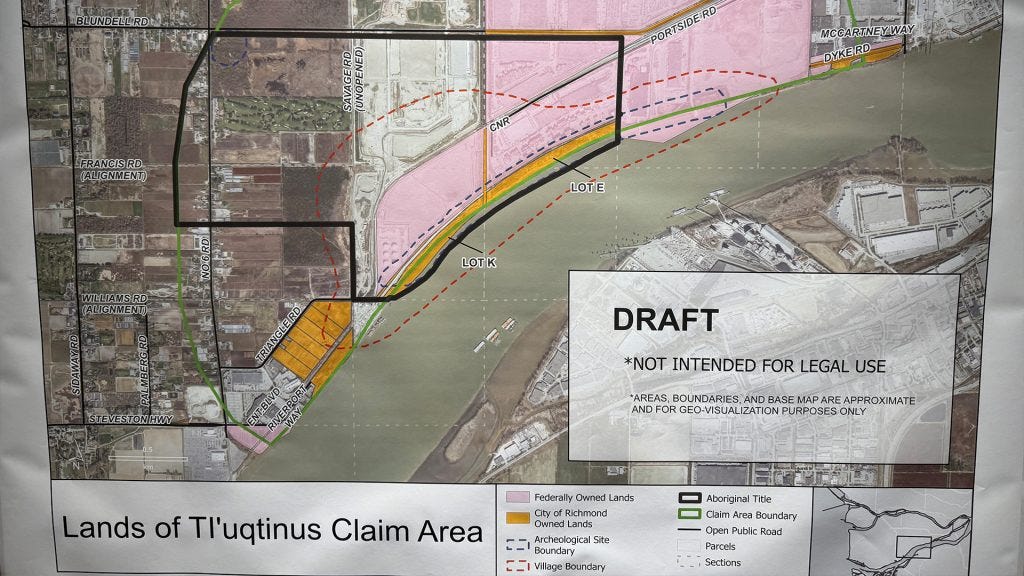
But when you actually look at the agreements—like the Musqueam agreement—the maps include large areas of fully developed urban land.
There’s no explicit exclusion of private property.
So we have a disconnect:
Public messaging: everything is fine
Legal documents: less clear
Court decisions: introducing uncertainty
And markets don’t handle uncertainty well.
This Isn’t Just a BC Problem
It’s tempting to think this is isolated to British Columbia.
It’s not.
The legal foundation for all of this is Section 35 of the Constitution. That applies across Canada.
If these issues escalate to the Supreme Court of Canada, any precedent could apply nationally.
That doesn’t mean the same outcomes everywhere. Ontario has a very different treaty history.
But the legal logic—once established—doesn’t stop at provincial borders.
And when you’re dealing with a country where housing is the primary store of wealth, even a small shift in perceived title security can have outsized effects.
The Bigger Economic Layer
There’s another layer to this that doesn’t get enough attention.
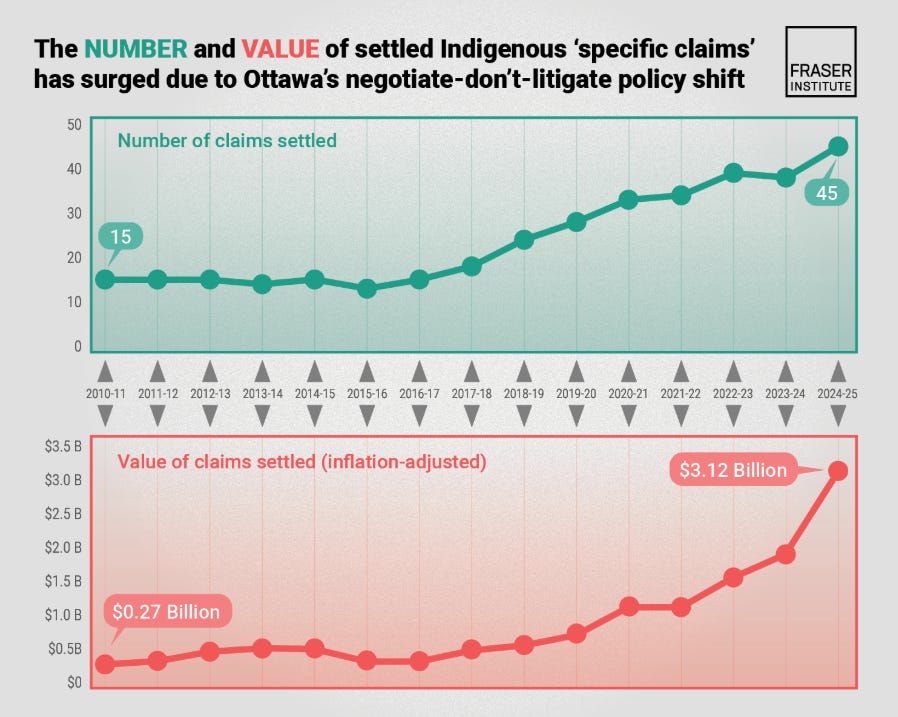
Governments are increasingly entering into revenue-sharing agreements tied to land and resources.
Conceptually, that makes sense. It’s part of reconciliation.
But economically, it raises a basic question:
If governments give up a portion of their revenue, how do they replace it?
If you don’t grow the economic pie, you’re just redistributing a fixed amount.
Which means:
Less funding for services
More pressure on infrastructure
Longer wait times, higher costs, weaker outcomes
This isn’t theoretical either. It’s already showing up in parts of BC.
This Is Not Anti-Reconciliation
It’s important to be clear about this.
Nothing here is an argument against reconciliation. In fact, the opposite.
A strong economy is what enables meaningful reconciliation.
You can’t share prosperity if you’re not creating it.
And right now, the risk isn’t that Canada is doing too much. It’s that we’re doing it without a coherent economic plan alongside it.
The Real Issue: Uncertainty
Markets, housing, and economic systems don’t collapse because of one decision.
They weaken because of uncertainty at the margins.
And right now, we’re introducing uncertainty into the most foundational layer of the system:
Property rights.
Not removing them outright.
But making people question how absolute they really are.
Why This Matters to You
Whether you:
Own a home
Rent
Invest in real estate
Or just work in the Canadian economy
This affects you.
Because real estate isn’t just housing. It’s collateral. It’s capital formation. It’s the base layer of how our financial system works.
And if that layer becomes unstable—even slightly—it ripples outward.
Final Thought
One line from the conversation stuck with me:
The system doesn’t break all at once. It erodes at the edges until one day you realize it’s not as solid as you thought.
Canada isn’t there.
But we’re closer to asking those questions than most people realize.