GST is to be forgiven on purpose-built rental housing creation. The Liberal government made this announcement today on CBC AT 4:00pm EST.
The policy comes 8 years after they original proposed the policy in 2015, and critics believe it is “too little, too late.” However, we feel this could help improve the economics of some purpose built rental housing enough to get supply built.
The policy comes as a response to growing calls from industry experts – especially 2 reports:
1. “A Multi-Sector Approach to Ending Canada's Rental Housing Crisis” (https://assets.nationbuilder.com/caeh/pages/453/attachments/original/1692060486/2023_National_Housing_Accord.pdf?1692060486)
2. CANSEA’s “Will Feds Answer the Call? Infrastructure Investment Lags Amidst Highly Taxed Housing Construction” (https://cms.rescon.com/media/PDFs/Will%20Feds%20Answer%20the%20Call.pdf)
The report indicates that federal accounts for about 5.5% of the total cost structure of housing.
What provinces are growing the fastest?
We looked at RBC’s most recent economics report about interprovincial migration:
Canadians on the move: will a pandemic shakeup in migration trends hold?
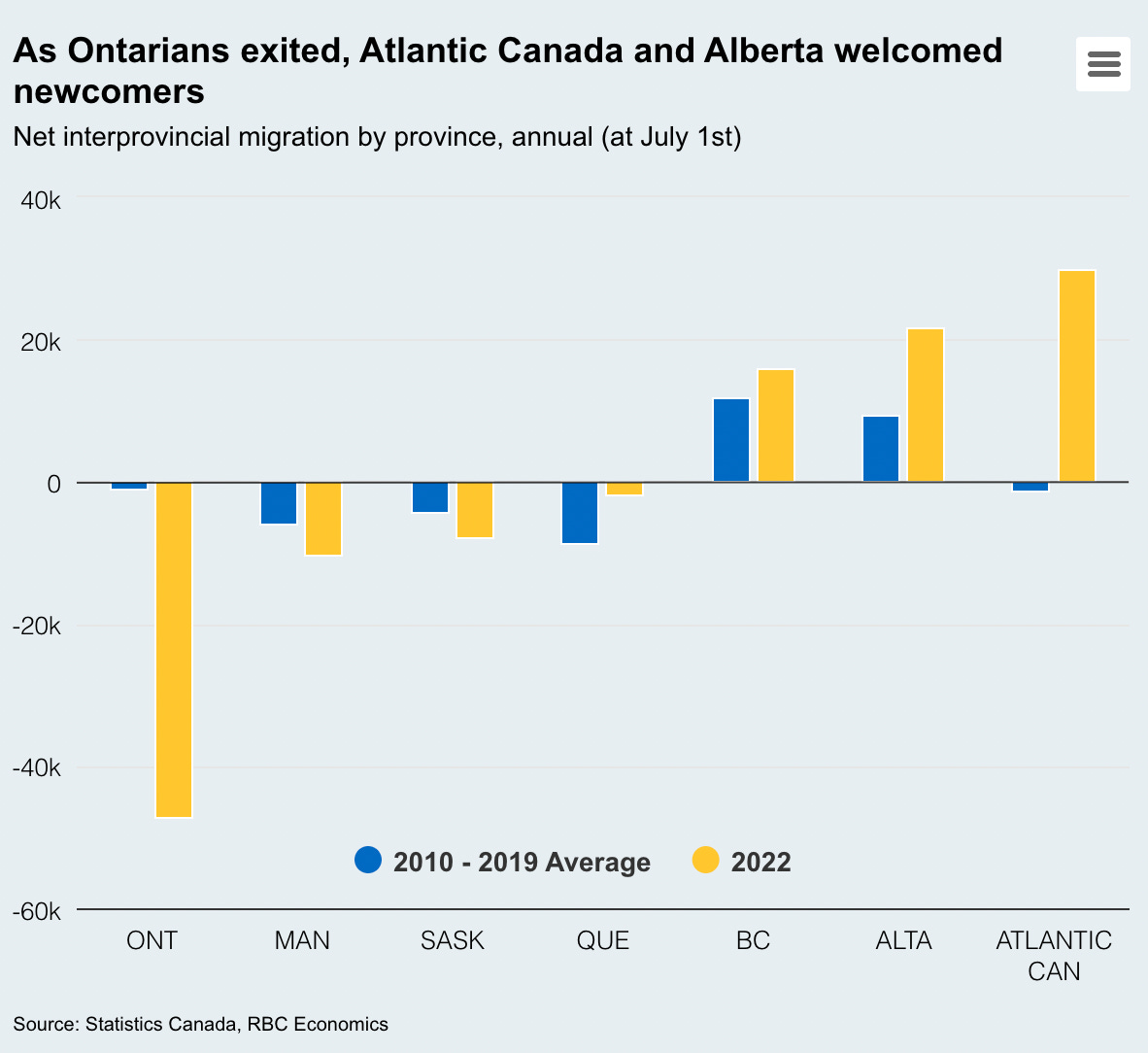
When I look at these trends alongside immigration trends, it appears that outside of Ontario and BC, interprovincial migration has a greater impact on house prices than immigration. In fact, prices seem to depend a lot on where Ontarians are moving.
The most notable example is visible in the Prairies vs Atlantic Canada:
Saskatchewan & Manitoba saw more immigrants than Nova Scotia and New Brunswick on an absolute and relative basis, but had negative interprovincial migration (losing existing people)
Nova Scotia and New Brunswick saw far more interprovincial migrants (and had net positive interprovincial migration)
During the same period of time, house prices rose much faster in Atlantic Provinces than Prairie Provinces.
I would assume this is because interprovincial migrants have a much higher likelihood to purchase real estate upon relocation than international migrants, who are statistically likely to rent for 3 years upon arrival.
Number of immigrants arriving in Canada in 2022, by province or territory of residence
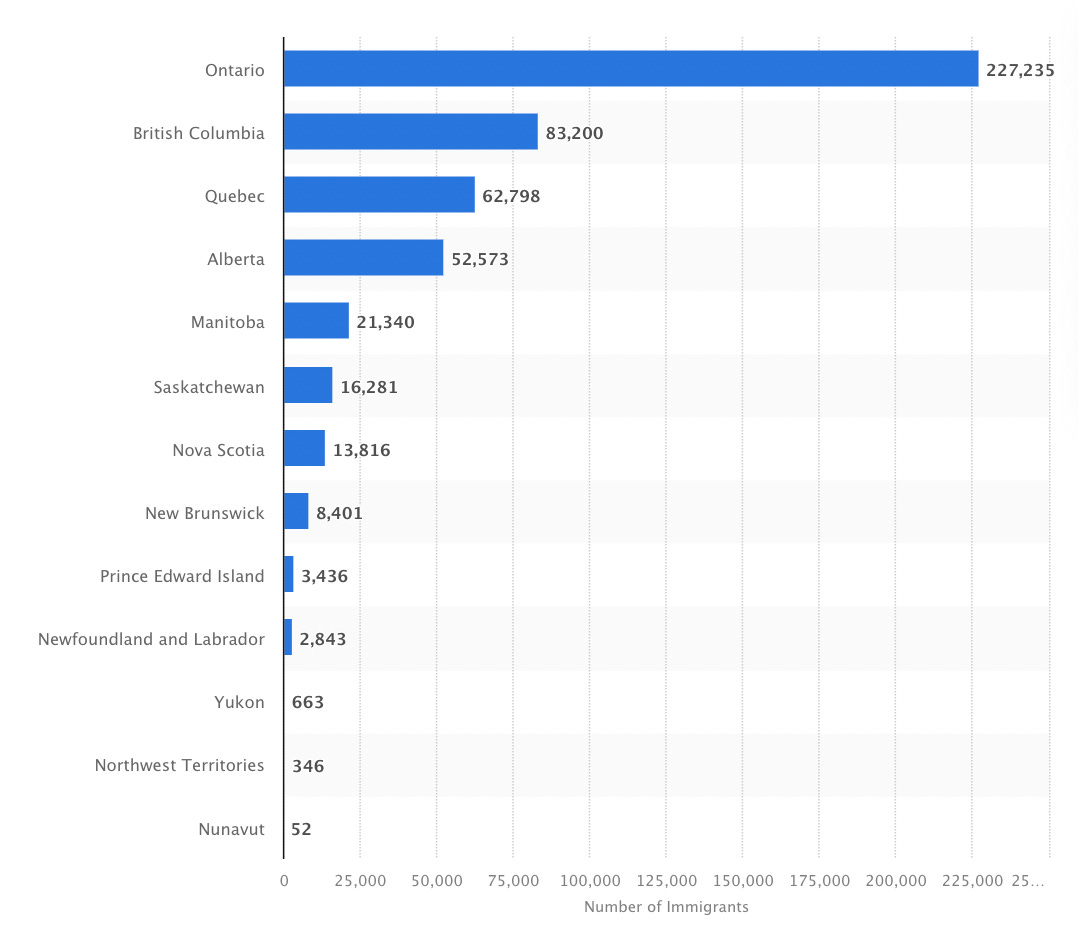
Source: https://www.statista.com/statistics/444906/number-of-immigrants-in-canada/
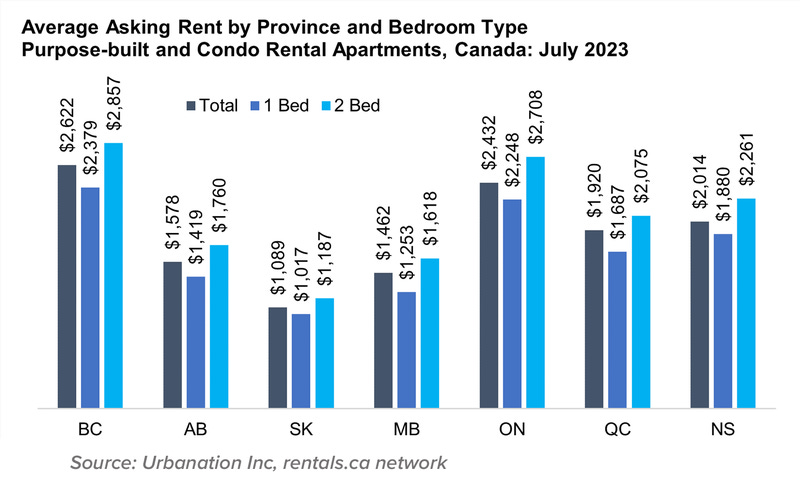
I expected this to materialize in comparably increased rents in areas with higher international migration, but that was not the case: