


Good morning readers, and welcome back to another The Canadian Real Estate Investor newsletter.
Today we have a very interesting topic - Maximizing Real Estate returns through Zoning.
But first, let’s start with a bit of housekeeping.
🧹Housekeeping
Last week we hosted our first major event in Toronto - Unpacking Multiplexes. Over 300+ attendees joined us, both virtually and in person. It was an evening full of informative discussions, learning from our excellent panelists, networking, meeting new people!
If you missed the event, no worries at all! We host a monthly meetup across Canada in 23 cities where you can attend and network. These meetups typically takes place every second Tuesdays. Our upcoming meetups across the country are on September 10th. Check out the link below to the website where you can see all our groups across the country. Don’t forget to join the group to get updates on future meet ups in your city, or a nearby city!
Link to the Meetup group: Meetup Group
🎙️Podcast Episode
Let’s dive in and recap on what we discussed for today’s episode.
What is Zoning?
Zoning is the process of dividing land into categories (e.g., residential, commercial, industrial) that dictate how properties can be used and developed. It's crucial for real estate investors to understand zoning laws to maximize their investments and ensure proper use of the land. Zoning laws dictate various aspects of land use, such as building height, density, and setbacks. In Canada, zoning is regulated at multiple government levels, including municipal, provincial, and federal.
Here is an example of what the zoning by laws look like:
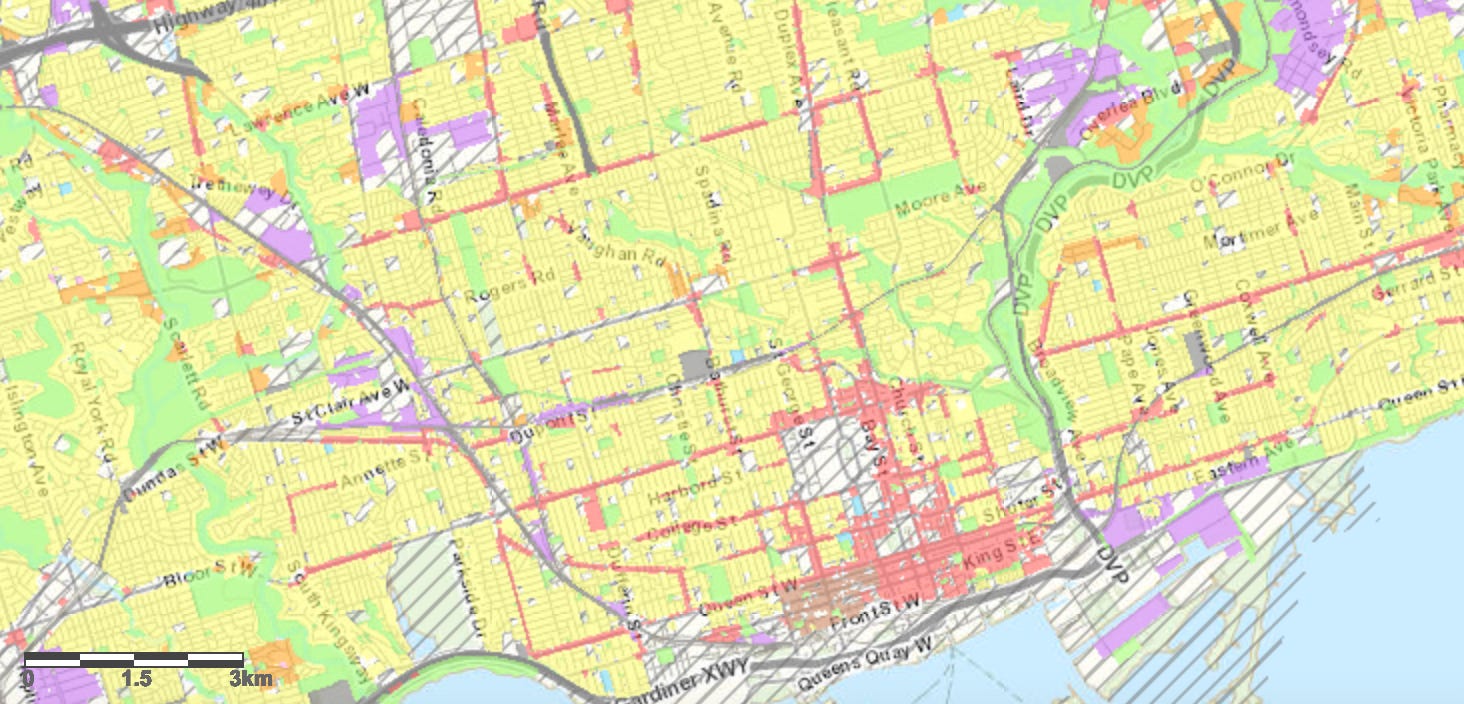
Source: City of Toronto
Let’s take a closer look
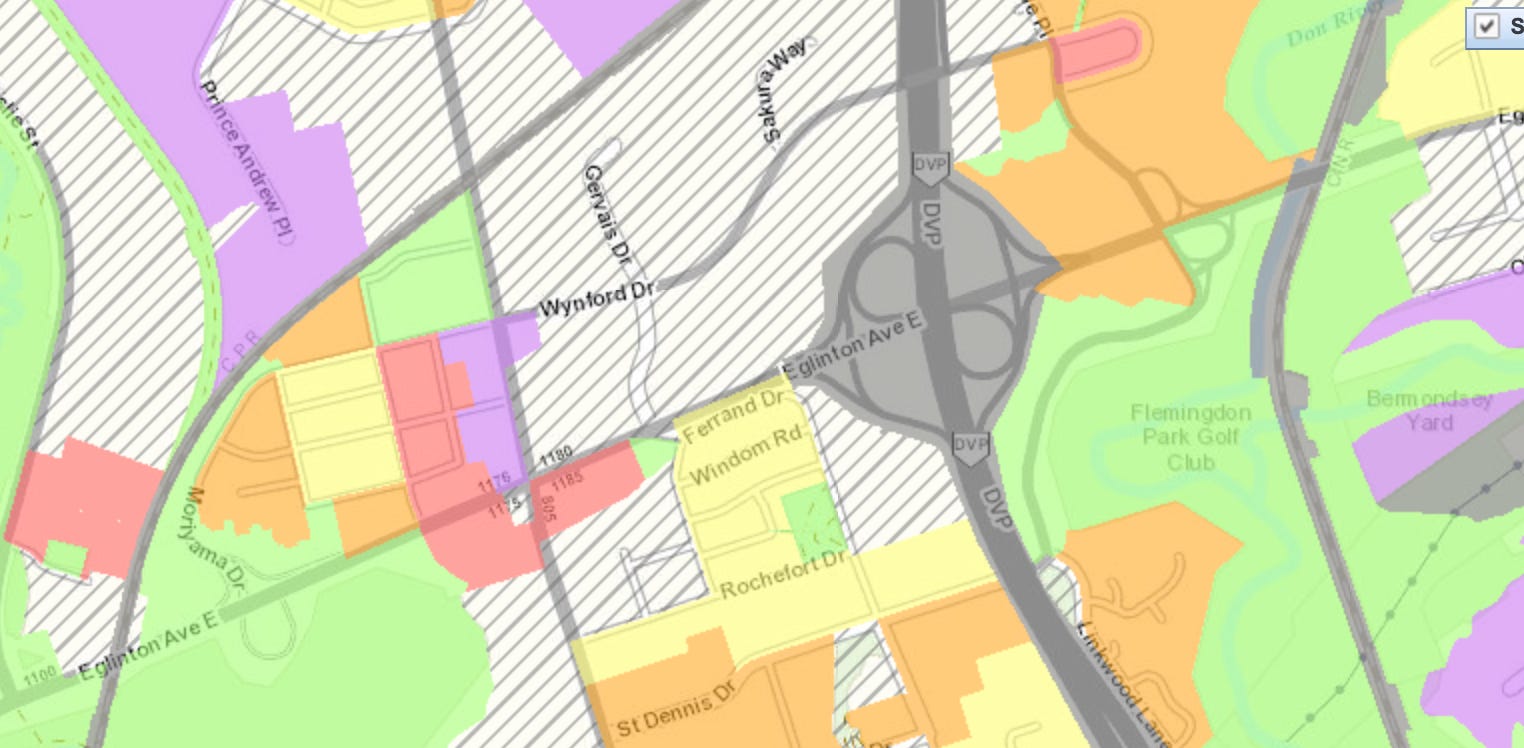
Source: City of Toronto
As you can see, they are all different colours, meaning that in some areas there are different zoning bylaws, so when attempting to alter your property, or build a new one, it’s important to check out your zoning regulations in the area.
Here’s a link to where you can check out most of the zoning by laws in Toronto:
You can find the zoning bylaws in your own city by heading to the city’s official webpage. I’ll list some examples below:
Calgary - https://www.calgary.ca/planning/land-use.html
Vancouver - https://maps.vancouver.ca/zoning/
Winnipeg- https://legacy.winnipeg.ca/ppd/zoning/Bylaws.stm
Edmonton- https://www.edmonton.ca/city_government/bylaws/zoning-bylaw
Ottawa- https://ottawa.ca/en/living-ottawa/laws-licences-and-permits/laws/laws-z/zoning-law-no-2008-250#
What’s the history of Zoning?
The concept of zoning dates back to ancient civilizations, where cities were organized based on different functions. Modern zoning emerged in the early 1900s in the United States, with cities like Los Angeles and New York pioneering these systems.
Can you change zonings by laws? Are there any restrictions and impacts?
Zoning can be changed through a rigorous process involving public feedback and government approval. This process is often influenced by local community groups, such as NIMBYs ("Not In My Backyard") who oppose certain developments. Single-family zonings in cities such as Toronto and Vancouver are typically restrictive which has contributed to the housing affordability crisis. The lack of diverse housing types has made it difficult for families who cannot afford multimillion-dollar homes to find suitable housing.
Recent policy changes are starting to address these issues. For instance, Toronto is revising its zoning laws to allow for more multiplex properties, which could increase housing availability in the city. Vancouver and other Canadian cities are also revising their zoning laws to allow for more diverse housing types.
What does this have to do with Real Estate Investing Strategy?
For real estate investors, zoning is a key factor that affects property value and potential returns. Investors should consider current zoning and possible future changes to determine the highest and best use of a property, which can lead to increased profitability. There is a potential of small-cap developers to alleviate the housing shortage by building more multiplexes and small-scale multi-unit homes. This could help meet the Canadian Mortgage and Housing Corporation's (CMHC) goal of 3.5 to 4 million new homes in the next decade.
Listen on Apple Podcasts:
Listen on Spotify:
Thanks for listening and see you again for Friday’s episode!
