

Ottawa has put $2 billion behind a National Heat Pump Rebate. A household below the median income could receive up to $10,000. Everyone else is in line for $2,000.
That sounds like a simple energy-savings story until you run an Ontario gas bill through the calculator.
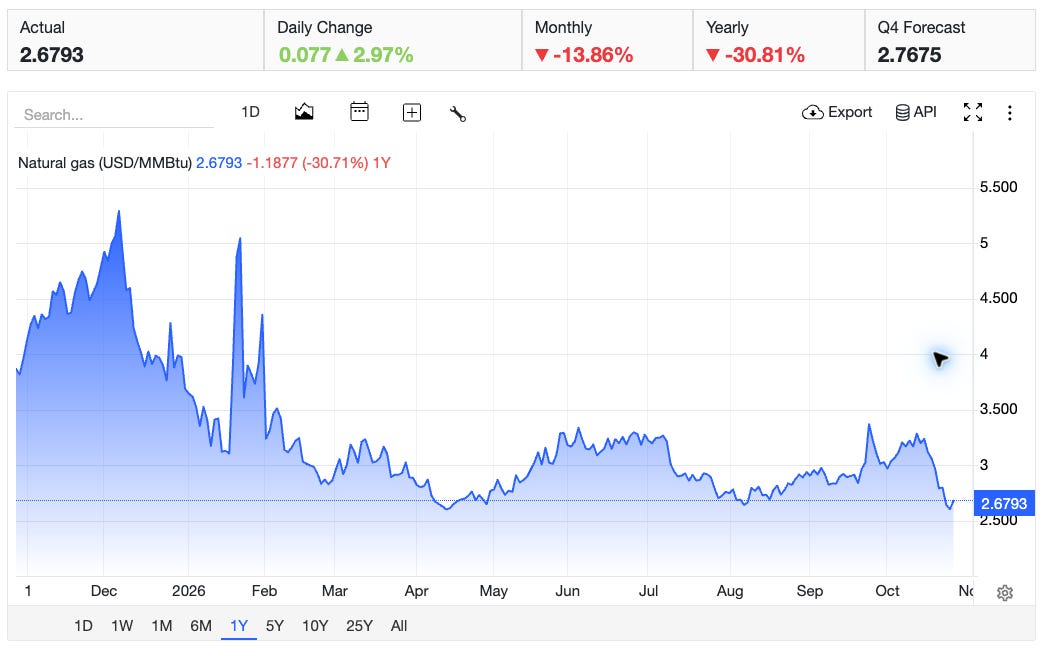
At today’s rates, a high-efficiency gas furnace can deliver heat for roughly 3.2 cents per kilowatt-hour. A cold-climate heat pump, using a measured seasonal performance range from a small Toronto-area pilot, lands around 4.8 to 5.8 cents.
The rebate helps with the purchase. It does not reverse the operating-cost gap for a typical Enbridge customer.
That distinction matters because the federal announcement says heat pumps can save households up to $1,400 a year. The government’s own backgrounder ties that figure to homes moving off oil, propane or electric resistance heat. It is not a promise to Ontario homeowners already heating with gas.
Listen to Episode 450 on Spotify, or use the show page.
The cheque is narrower than the headline
The program is supposed to launch in early 2027 and reach as many as 820,000 households over eight years. Ottawa says there will be no home-energy audit, approval should take about 24 hours and payment approval should follow within five days of submitting receipts.
Those are sensible choices. A rebate nobody can navigate is mostly a press release.
The eligibility details are less settled. The exact below-median income threshold and any sliding scale have not been published. Retroactivity to fall 2026 is being considered, but has not been confirmed. The government also says the rebate is limited to one per person, rather than one per property.
That last rule is easy to skip and important for anyone with multiple houses. A landlord cannot assume the same owner can collect a federal cheque for every door.
Ontario’s existing Home Renovation Savings program can improve the picture, but rental properties appear to get the gas-heated tier even when the building uses baseboards. That means roughly $2,000 rather than the larger owner-occupied electric-heating amount. The current program status and stacking rules should be confirmed before anyone orders equipment.
Cheap gas changed the calculation
The awkward part of this policy is that residential gas became cheaper when the federal consumer fuel charge disappeared.
Using Enbridge’s October 2026 marginal gas rate, including HST, the working cost is about 31.4 cents per cubic metre. One cubic metre contains roughly 10.36 kilowatt-hours of energy. Put that through a 95 per cent efficient furnace and the delivered heat costs close to 3.2 cents per kilowatt-hour.
For electricity, the episode uses an all-in Toronto assumption of 13.8 cents per kilowatt-hour. Divide that by a seasonal heat-pump coefficient of performance, or COP, of 2.4 to 2.9 and delivered heat costs about 5.8 to 4.8 cents.
For every 1,000 cubic metres of furnace gas displaced, that is roughly $314 of gas versus about $470 at a COP of 2.9 or $565 at a COP of 2.4.
Before the fuel charge was removed, the heat pump needed a seasonal COP near 2.8 to match gas. Now the break-even point is roughly 4.3. That is a very good machine operating in favourable conditions, not a safe whole-season underwriting assumption for an ordinary Toronto house.
There is one useful offset. A homeowner who removes gas completely can avoid Enbridge’s monthly customer charge, currently $27.69 before tax. That is roughly $375 a year with HST. A hybrid setup keeps the connection, so it keeps the charge.
Time-of-use electricity can also help. It can hurt just as quickly if the equipment runs hard during a weekday 4 p.m. to 9 p.m. peak. Optimizing a house around ultra-low overnight pricing can work. It can also turn heating the place into a part-time job.
Replacement timing does more work than the rebate
The better comparison is rarely heat pump versus a perfectly good furnace.
If both the furnace and central air conditioner are near the end of their lives, the capital-cost gap gets much smaller. The episode’s working estimates put a replacement furnace at $4,900 to $8,000 before HST and a basic air conditioner around $4,000. Together, that is roughly $8,900 to $12,000.
A cold-climate heat-pump installation was modelled at $15,000. Apply the $2,000 federal rebate and as much as $2,000 from the Ontario gas-heated tier, if stacking is allowed, and the net lands near $11,000.
That is close enough to compare comfort, cooling, equipment quality and future utility-rate risk. It is nowhere near as compelling when the furnace is five years old and the electrical panel needs a $3,200 to $4,500 upgrade.
Cold-weather performance is not the punchline it used to be. Good equipment is rated to about minus 30 C. An NRCan test recorded a COP of 1.5 at minus 21 C, and a Toronto and Region Conservation Authority pilot found five of six homes carried their load below minus 10 C. The pilot is useful, but six homes are still six homes.
The practical questions are more boring: Is the unit sized from a proper heat-loss calculation? Can the ductwork move enough air? Does the panel have capacity? Will backup heat be electric or gas? Who pays that bill in a rental?
The answers decide whether the rebate is helpful or expensive theatre.
Five units can change the conversation
For a single house, this is mostly an equipment decision. At five units or more, a heat-pump retrofit may also earn energy-efficiency points under CMHC’s MLI Select program.
That can affect the loan amount, amortization and the insurance premium. An existing building can earn 20, 35 or 50 energy points for a modelled 15, 25 or 40 per cent reduction in consumption and greenhouse-gas emissions. New construction uses different thresholds tied to the applicable building code.
At 50 points, a new project can access up to 95 per cent loan-to-cost and a 40-year amortization. Higher scores can extend amortization and reduce the mortgage-insurance premium. One episode example on a $5 million build estimated about $349,000 in premium at 50 points, $320,000 at 70 and $289,000 at 100. Reaching 100 points saved roughly $60,000 compared with 50.
That does not mean a heat pump creates 100 points. Energy and accessibility alone top out below that mark, so affordability commitments are needed. Nor should anyone assume a full conversion automatically reaches the 40 per cent energy tier. A qualified modeller has to prove it.
Still, financing can be worth more than the appliance rebate. Moving from a 40-year to a 50-year amortization on a $5 million insured loan at a four per cent illustration lowered monthly debt service by about $1,600 in the episode’s math. That is close to $19,000 a year in cash flow, before considering the premium discount.
For a developer or apartment owner, those numbers deserve a separate underwriting page. The utility bill is only one line.
Who should look closely
Homes using oil, propane or electric baseboards have the cleanest operating-cost case. The federal $1,400 savings claim was written for them, and an income-qualified $10,000 rebate can cover a meaningful share of the installation.
An Ontario gas homeowner should start with equipment age. If the furnace and air conditioner are both due, price a heat pump beside the combined replacement. If only one component is tired, the rebate may not rescue the job.
Rental owners need to confirm property eligibility, rebate stacking and who pays utilities. Spending capital to lower a tenant’s bill can still be a reasonable building decision, but it is a different return calculation.
Owners of five-plus-unit properties should ask an MLI Select energy modeller what the retrofit does to the point score. Do that before picking equipment. The financing value may be larger, and it may require a broader scope than one mechanical upgrade.
Ottawa’s new program will make some good projects easier to fund. It will also produce plenty of bad quotes dressed up with a rebate line.
The heat pump did not suddenly become worse. The relative economics changed when the fuel charge on gas went to zero. In Ontario, the honest sales pitch is replacement timing, cooling and long-term optionality. Lower operating cost is still a house-by-house claim that has to survive the utility math.