


You’ve probably heard the phrase “the great wealth transfer.”
It’s been one of the dominant narratives in finance over the past few years: trillions of dollars moving from baby boomers to younger generations as the largest, wealthiest cohort in history ages and passes on their assets.
Listen to the full episode:
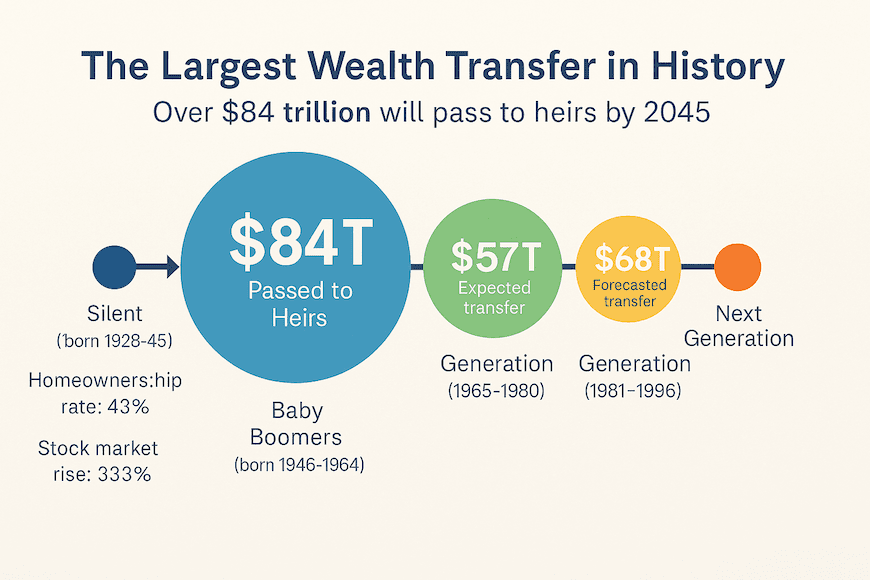
Globally, the numbers are staggering. Estimates suggest $124 trillion will change hands over the next 25 years, with millennials receiving the largest share.
But there’s a critical nuance that gets lost in most of that coverage.
In Canada, this isn’t really a wealth transfer.
It’s a space transfer.
The Global Story: Financial Wealth Changing Hands
In countries like the U.S. and U.K., wealth is broadly diversified.
Think:
equities
bonds
private businesses
alternative investments
real estate (as one slice of the pie)
For wealthy households, real estate is just one asset among many. A typical portfolio might look something like:
~55% equities
~20% bonds
the rest in alternatives and real estate
So when wealth transfers, it reshapes:
stock markets
capital allocation
risk appetite
That’s why the narrative is framed around financial markets.
The Canadian Reality: Wealth Is Housing
Canada is different. Dramatically different.
By the end of 2024:
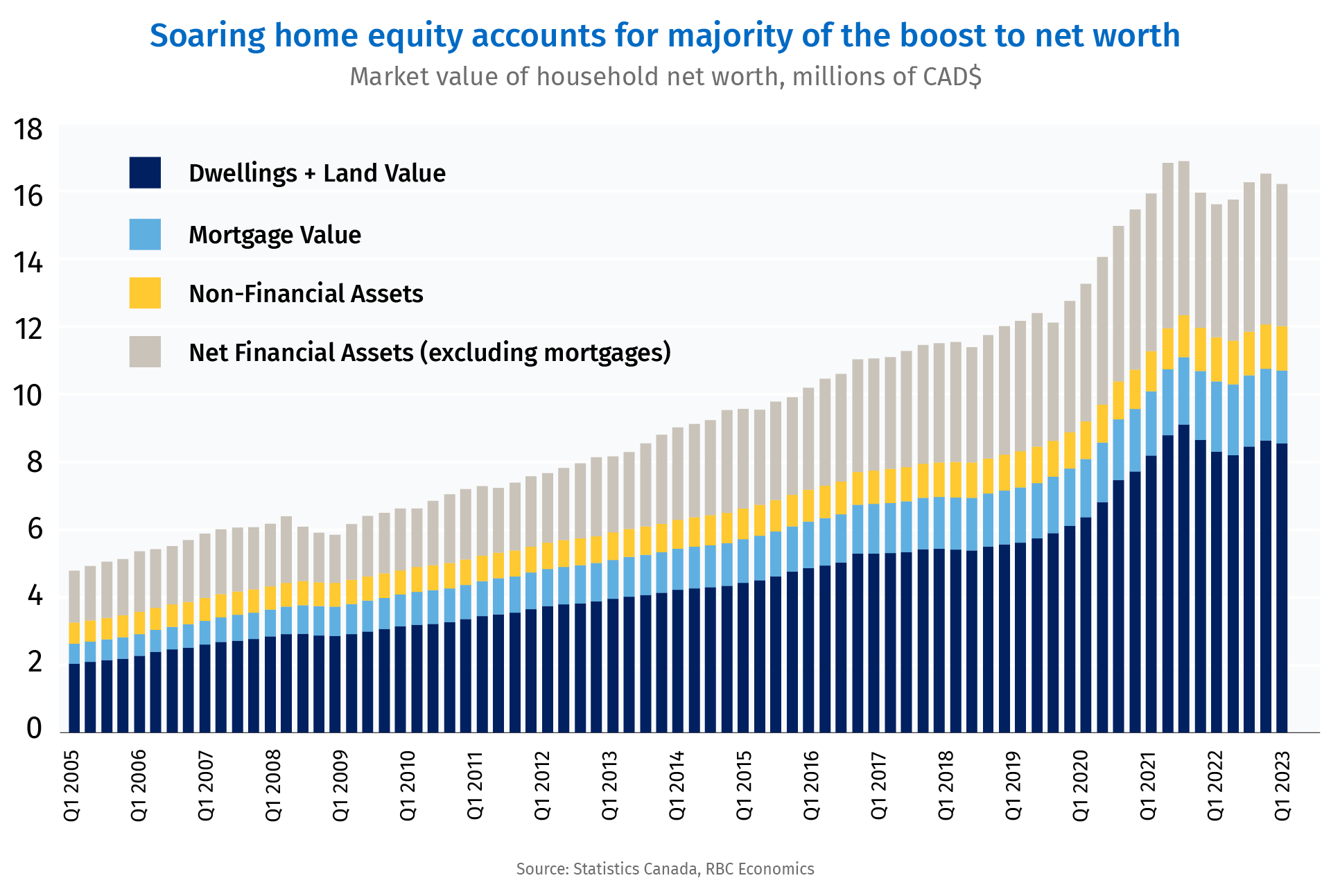
Canadian residential real estate was worth $8.4 trillion
That’s roughly 4x the country’s GDP
And about 40–43% of total household assets
Even more telling:
For the average household, about 70% of assets are tied up in housing and vehicles, not financial markets.
This is the key insight:
In Canada, wealth = housing.
So when wealth transfers…
what’s actually moving is physical property.
Who Holds the “Space”?
The distribution makes this even more important.
Baby boomers (~25% of the population) own 41% of all homes
~75% of boomers own their home
~64% are mortgage-free
And these aren’t static assets.
These are:
homes that have appreciated for decades
often tax-free (primary residence exemption)
concentrated in major urban markets
You effectively have:
A massive generation sitting on fully paid-off, highly appreciated real estate.
And now, the demographic clock is ticking.
The Scale of What’s Coming
This isn’t theoretical.
Between 2023 and 2026 alone, roughly:
$1 trillion is expected to transfer from boomers to younger generations
About 36% of that is directly in real estate
That’s just the beginning.
Over the next 15–20 years, a huge portion of Canada’s housing stock will:
be inherited
be sold
or be redistributed within families
Why This Changes Everything
When you inherit financial assets, you gain capital.
When you inherit real estate, you gain something much more powerful:
access.
Access to:
a market
a city
a neighbourhood
a lifestyle
a wealth-building engine
And in Canada, that access is increasingly everything.
The Reinforcing Loop
The data already shows this playing out.
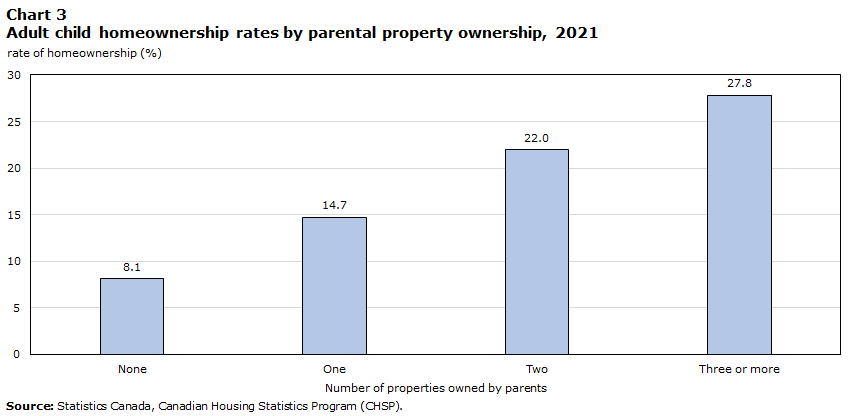
Young Canadians whose parents own homes are 2x more likely to own themselves
Homeownership rates among young people are falling
The gap between owners and non-owners is widening
Which leads to a simple, uncomfortable truth:
Homeownership in Canada is becoming hereditary.
Not entirely. But directionally.
If your parents bought:
in Toronto in the 90s
in Vancouver pre-2010
anywhere before the explosion in prices
Your financial trajectory is fundamentally different.
This Isn’t Just About Inequality
This is about structure.
Because when wealth is tied to space:
it can’t be easily divided
it’s geographically fixed
and it directly affects where people can live
That creates second-order effects:
labour mobility declines
urban inequality rises
political pressure builds
And importantly:
It makes housing policy the central economic issue of the next generation.
The Bottom Line
The global conversation is about trillions moving between portfolios.
The Canadian reality is simpler—and more consequential:
We’re not passing down wealth.
We’re passing down housing.
And in a country where housing is wealth…
That might be the same thing.
But it doesn’t feel the same depending on whether you’re inside or outside of it.
As someone with nothing to inherit, this changes how I think about investing. House hacking feels less like a hack and more like a necessity.