

Toronto’s multiplex business just got less cinematic. That may be healthy.
We’re 1 week out from Toronto’s Biggest Multiplex Event - Get Tickets:
https://realist.ca/community/events/unpacking-multiplexes-toronto
Hooman Tabesh told me the last two projects completed by Alliance REIT appraised at cost. In earlier years, he said, the average post-development appraisal had come in about 18% above cost.
That is one operator’s experience, not a market index. It still captures the change in mood. When the appraisal stops handing you instant equity and renters have choices, the work moves to places that rarely make an Instagram reel: leasing during a notice period, reading water meters, inspecting mechanical equipment and answering the neighbour’s phone call.
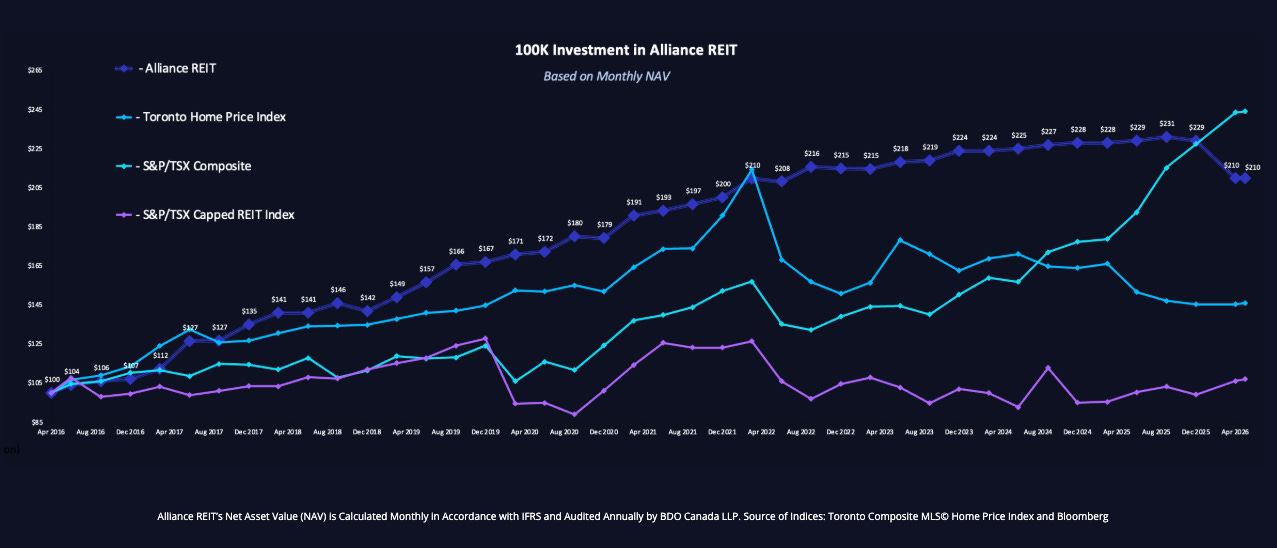
Hooman is the CEO of Alliance REIT, a Toronto-focused private REIT that says it owns more than 30 boutique multiplexes. He joined me on The Canadian Real Estate Investor to talk about CMHC financing, tenant turnover, development scale and what ten years of operating small buildings has taught him.
The appraisal stopped doing the work
Alliance began as a developer that also managed its finished buildings. Hooman now describes it in the opposite order: a landlord and property manager that develops its own supply.
That reversal is important.
A long-term owner inherits every assumption in the pro forma. If rents come in lower, turnover rises or insurance costs jump, nobody at lease-up cares how elegant the acquisition deck looked.
Hooman said Alliance once underwrote new units around $5 to $5.50 per square foot. Its current underwriting is closer to $4. He also said the company has held rents flat for two years on occupied units because keeping a good resident can be worth more than collecting the permitted increase.
Those are Alliance’s figures, not a rent forecast. The useful point is the direction of the adjustment: the deal has to survive today’s renter, not yesterday’s asking rent.
For a buyer evaluating a development site, run the hold case with a flat appraisal and a sober rent. If the project only works because the stabilized value is comfortably above cost, you are underwriting a rescue rather than an exit.
Seventy turnovers is not seventy empty units
The sharpest number in the interview was tenant turnover.
Hooman said Alliance had historically dealt with roughly 10 to 12 move-outs in a typical year. Over the past year, it handled close to 70. He estimated that as roughly 40% to 45% of the portfolio.
He was equally clear that turnover and vacancy are not the same. Alliance generally replaced outgoing residents within Ontario’s two-month notice period. The units did not sit empty simply because more people moved.
But every turn creates work: showings, screening, cleaning, repairs, keys and the risk of losing rent between tenancies. Hooman put the cost of one empty month in his buildings at roughly $2,500 to $3,000.
His exit interviews produced three recurring explanations. About one-third had bought a home. Another group found condos being offered cheaply by owners who could not sell. The remainder were attracted by two or three free months at new purpose-built buildings.
That mix is revealing. A landlord is competing with homeownership, distressed condo supply and institutional lease incentives at the same time.
Cutting the asking rent is one response. Hooman’s preferred response has been to protect the resident relationship, lease early and reduce the expenses he can actually control.
Small operating habits now carry the return
Some of the best details in this episode were almost embarrassingly ordinary.
Alliance staff submit actual water-meter readings rather than accepting estimated Toronto Water bills. Hooman said the estimates had often been materially higher than usage. The company inspects each property weekly and checks major mechanical systems so a strange noise can be addressed before it becomes a failure. It also looks at heat pumps, appliances, insurance and the time required to turn a unit.
None of those actions creates a dramatic new revenue line. Together, they determine how much of the rent survives.
Small landlords should track when notice arrives, when the replacement lease is signed, the real cost of each turn, water consumption and recurring maintenance calls. A vague sense that a property is “basically cash-flowing” is no longer enough.
Sellers should expect serious buyers to ask for those records. Clean operating data can make a building easier to finance and easier to trust.
CMHC is also underwriting the operator
The episode began with a problem we keep hearing from newer multiplex developers: a site was purchased on one financing assumption, then the borrower discovered that experience mattered more than expected.
The current CMHC MLI Select product sheet says a borrower must demonstrate competence and experience appropriate to the size and type of property. Its general guideline calls for five years of experience managing similar multi-unit properties, either with the borrower or an affiliated corporation. A formal contract with an experienced third-party property manager is an alternative.
Hooman said Alliance did not complete its first CMHC-financed deal until it already had about 60 doors under management.
We discussed whether an experienced operator could partner with a capable first-time developer and lend credibility to the application. Alliance is exploring the idea. It is not a program being offered in this article, and a partner’s name cannot turn weak economics into an insurable loan.
If your original financing plan is failing, get the approved lender, mortgage adviser and experienced operator into the same conversation early. Compare a real partnership with conventional financing, a smaller project or a sale. Do not assume CMHC approval because the building scores well on the public points grid; MLI Select also has borrower and documentation requirements.
A private REIT does not trade like a public REIT
Alliance uses an open-ended REIT structure rather than raising a separate GP/LP vehicle for every property. Hooman described the benefit as continuous capital for a repeatable strategy and the ability to hold the investment in eligible registered accounts.
He also described the hard part: real estate is illiquid while investors may want redemptions. That mismatch requires cash planning around projects, operations and investor requests.
Alliance’s December 2025 fund fact sheet says redemptions are monthly but subject to notice and settlement, and that early-redemption terms apply. The offering memorandum governs. This is not the same liquidity as pressing “sell” on an exchange-listed REIT.
Ask how units are valued, what notice applies, what limits or penalties can delay a redemption, how much cash the manager keeps available and what happens during a rush for the exit. “Evergreen” describes the fund’s life; it does not remove the liquidity problem from the underlying buildings.
The neighbourhood is part of the product
Hooman’s most useful development advice did not involve leverage.
When Alliance buys a site, he introduces himself to the neighbours on each side and across the street. He gives them his number. If dust or noise becomes unreasonable, he wants the call before the city gets it.
He told one crew to stop jackhammering when a neighbour’s child was sleeping. On another site, his team shovelled the adjoining homeowner’s driveway through the winter. She later brought cookies to the trades.
In small infill, the construction site and the eventual rental product share the same street. Neighbour friction can create delays. Neighbour trust can create room to solve a problem.
It also connects to Hooman’s location test: stand at the property and ask, “Would I live here?”
In a rising market with scarce rentals, an inferior unit in a weak location may still fill. In a more balanced market, renters can choose the cheaper condo, the new tower with incentives or the better street. A multiplex without a pool or concierge is selling the neighbourhood as its amenity.
What I would take from this episode
For a first-time developer, start with a scale you can actually supervise. Hooman mentioned details as small as a 15-foot versus 16-foot building width and the space lost when a grandfathered staircase is replaced. That knowledge is earned on drawings and job sites.
For an investor, diligence the operator with the same energy you apply to the property. Ask about turnover, arrears, utility controls, preventive maintenance, appraisal policy and redemption planning.
For a homeowner considering a multiplex conversion, the legal permission to add units is only the beginning. Financing experience, construction logistics, future management and neighbour relations all arrive behind it.
For a seller, document the boring work. In this market, credible expenses and a defensible rent roll may carry more weight than a heroic future appraisal.
The multiplex opportunity has not disappeared. It has matured into a business where the landlord has to earn the spread after the ribbon is cut. That is less cinematic. It is also more durable.
Educational discussion only; not legal, tax, mortgage, real-estate or investment advice, and not an offer or endorsement of any security. Program and fund terms can change. Obtain advice specific to the property, financing and investment before acting.